
Top entertainment ideas for your visit to Singapore
Singapore is considered as one of the world’s cleanest city. Although this island might appear small yet gives you a great dose of entertainment. Visitors across the globe are interested to explore this city and experience the true versatile culture of Singapore. This place should be visited at least once and is fast gaining reputation for its natural beauty and also for its city culture. Here are a few entertainment ideas which you should try in Singapore.
The Merlion

This is the statue that depicts Singapore. Even a kid can identify this peculiar statute which represents the city to the world. This is a must visit place when you are in Singapore. The statue resembles the city as mer means sea and lion states the original name of the place. Located in the twenty five thousand square metre park, this statue is attracting the crowds from all over the world and is the main tourist attractions in the city.
Esplanade

There is no fun when you do not witness the arts and culture hub in Singapore and that is esplanade. This is nicknamed “The Durian” as the structure of the building resembles the durian fruit. This place should be visited by all the theatre lovers just to experience the theatre scene in the city.
Mount Faber
This is another most popular tourist destination in Singapore. To enjoy a relaxing day, take a trek into the park, or take a cable car to Sentosa Island this p[lace holds its own beauty. You can enjoy the panoramic view of the city and southern islands. You have excellent dining facilities so plan a relaxing picnic and enjoy the day in leisure.
Universal Studios Singapore


Have a blast in the only southeast Asia’s only universal studios theme park. Yes, have a complete fun day with your friends and family in this theme park where you different themes such as Hollywood, New York city, Far far away and more. This is a great entertainment idea and should definitely visit when you are in Singapore.
Marina Bay Sands


Considered as one of the greatest attractions of Singapore, Marina bay sands have just added a jewel to the city. This massive resort with one of the world’s most famous roof top swimming pool has gathered a lot of tourists. This also consists of a museum, theatre and the biggest casino in the globe. Yes you can experience Las Vegas in Singapore which is truly a tremendous experience.
- Plan the trip properly and organise your budget
- There are various accommodation options available so choose the one which caters your needs
- Budget is very important hence do it carefully
- Decide the places you want to see so that you might not miss your favourite place
- Book through travel agency which might come into your budget
- At any time if you experience cash shortage for your travel take cash payday that are short-term loans that credit instant cash.
 Guest Author
This guest post is written by Sophie, who is a specialist in financial blogging from Manchester. Apart from blogging, she does research on cash payday Reach her at financeport.
Top 10 Must Read Books for Deck Cadets
Cargo Work by Capt. Errol Fernandes
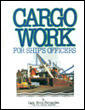
This book covers prescribed syllabus for 2nd. Mate F.G. It is written by Capt. Errol Fernandes (M.I.C.S., Extra Master)
Marine Meteorology by Capt. H. Subramaniam.

Practical Navigation by Capt. H. Subramaniam.

Ship Stability- I by Capt. H. Subramaniam.

The Theory and Practice of Seamanship by Graham Danton

Principles of Navigation by Capt. P. M. Sarma

SOLAS (issued by IMO)

Chart Work for Mariners by Capt. S.K. Puri

Manual of the Rules of the Road by Capt. S.K. Puri

MARPOL (issued by IMO)


This book covers prescribed syllabus for 2nd. Mate F.G. It is written by Capt. Errol Fernandes (M.I.C.S., Extra Master)
Marine Meteorology by Capt. H. Subramaniam.

Practical Navigation by Capt. H. Subramaniam.
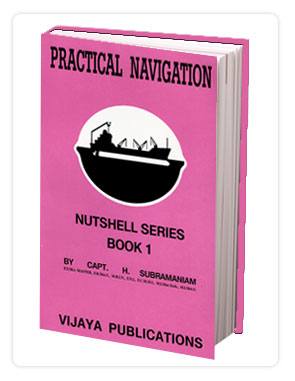
Ship Stability- I by Capt. H. Subramaniam.

The Theory and Practice of Seamanship by Graham Danton

Principles of Navigation by Capt. P. M. Sarma

SOLAS (issued by IMO)

Chart Work for Mariners by Capt. S.K. Puri

Manual of the Rules of the Road by Capt. S.K. Puri

MARPOL (issued by IMO)

Blocks and Tackles - Equipment On Board
The purpose of a block is either to change the direction of pull on a rope or else to act, in conjuction with other blocks as a tackle for reducing the pull required to lift or shift a heavy object. The essential part of a block is sheave.

The sheave or sheaves revolve on a pin, And the pin itself is supported by the shell. The Shell consists of two or more cheeks connected at top and bottom by distance so as to keep the cheeks sufficiently apart for the sheaves to be slipped in and a metal binding which provides an eye car hook at the top and a becket at the bottom.The top of the shell is called crown and its bottom is called tail.

Single Sheave: The single-sheave block has only one sheave and may or may not have a hook or becket.

The sheave or sheaves revolve on a pin, And the pin itself is supported by the shell. The Shell consists of two or more cheeks connected at top and bottom by distance so as to keep the cheeks sufficiently apart for the sheaves to be slipped in and a metal binding which provides an eye car hook at the top and a becket at the bottom.The top of the shell is called crown and its bottom is called tail.
Types of Blocks
There are several different types of blocks, below are some different types of blocks.
Single Sheave: The single-sheave block has only one sheave and may or may not have a hook or becket.
Clump Block
Built Block
External Bound Block
Internal Bound Block
Non Toppling Block
Gin Block
Coaling Block
Stropped Block
Tail Block
Hook Block
Binding
The binding has holes in each of its arm through which the pin is passed. Very small wooden blocks may not have the binding.In that case the outer cheeks are scored to take a strap for suspending the block. The space between the sheaves and the crown through which the ropes passes is called swallow. This block will take the rope one tenth the size of rope is measured by diameter in millimeters.
Tackles
A Tackle is a set of two single or multi-sheaved blocks with single continuous rope rove through both of them. Tackle are used to reduce the pull required to lift or shift a load.
For example: If ten men are required to drag a case of machinery across the deck, only two may be sufficient if a tackle is used.
One of the blocks is fixed to stationary point. It is called the standing block. The other block is called the moving block and it is hooked to the load which is to be lifted or shifted. The standing part of a rope is fastened to a becket in one of the blocks the other end of the rope is called the hauling part, running between the two blocks is called running parts.
Types of Tackles
Gun tackle. Place two single-sheave blocks about 3 feet apart with the hooks or straps facing outboard and both blocks in the same position, either on their face or cheek. Next, they should run the line through the first and second block, then splice it to the becket of the first block. Gun tackle has a 2 to 1 mechanical advantage.
Luff tackle. Position one single- and one double-sheave block in the same manner as with the gun tackle. Run the line through one of the sheaves of the double-sheave block first and then to the sheave of the single-sheave block. Next, run the line through the other sheave of the double-sheave block and splice the line to the becket of the single-sheave block. This tackle offers a 3 to 1 mechanical advantage.
Twofold purchase. Position two double-sheave blocks in the same manner as with the luff tackle. Reeve the line through the top or bottom block, stay in sequence, and never cross from one side to the other. After reeving the tackle, splice the standing line to the becket. Twofold tackle has a 4 to 1 mechanical advantage.
Double luff tackle. Obtain a double- and a triple-sheave block. Place the blocks 3 feet apart with the hooks or straps facing outboard and position the blocks so that one is face down and the other cheek down. When reeving a tackle that has one block with more sheaves than the other, always start with the block with the most sheaves. In this instance, start reeving through the center sheave, keeping the line parallel. Never cross from one side to the other. Double luff tackle has a 5 to 1 mechanical advantage.
Threefold purchase. Place two triple-sheave blocks 3 feet apart, with the hooks or straps facing outboard, positioning the blocks so one is face down and the other is cheek down. Start reeving in the center sheave of one block and finish in the center sheave on the other. Then splice the standing part to the becket. This tackle offers a 6 to 1 mechanical advantage.
Vessel - What does it mean?
According to Rule no. 3 (General Definitions) of Rules of the Road, The word "Vessel" includes every description of water craft, including non-displacement craft, WIG craft (Wing-In-Ground craft) and Seaplanes, used or capable of being used as a means of transportation on water.
Here are Some Different Types of Vessels Apart from Cargo
1: Cargo Ships

2: Wing In Ground Craft

3: Seaplane

4: Hovercraft

5: Sailing Vessel

6: Submarine

7: Cruise Ship

8: Ferry

Here are Some Different Types of Vessels Apart from Cargo
1: Cargo Ships

2: Wing In Ground Craft

3: Seaplane

4: Hovercraft

5: Sailing Vessel

6: Submarine

7: Cruise Ship

8: Ferry

Tag :
Types of Ships,
Vessels
Top 10 Largest Ships in the World
There are many giant ships and not everyone is aware about them, Today I'm going to list some of the largest ships in the world. The List will include general ship information like Ship Type, LOA (Length Overall), DWT (Deadweight Tonnage), Gross Tonnage, Service and current status. So Without wasting time let's begin.
1: Seawise Giant
At Present Seawise Giant is the biggest ship in the world ever built.
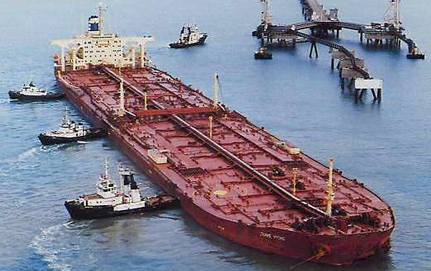
1: Seawise Giant
At Present Seawise Giant is the biggest ship in the world ever built.


- Ship Type: Oil Tanker
- Lenght Overall (LOA): 458.46 m (1,504.1 ft)
- Deadweight Tonnage (DWT): 564,650 DWT
- Gross Tonnage: 260,851 GT
- In Service: 1979–2009
- Status: Broken
2: Pierre Guillaumat

- Ship Type: Oil Tanker (Supertanker)
- Lenght Overall (LOA): 414.23 m (1,359.0 ft)
- Deadweight Tonnage (DWT): 555,051 DWT
- Gross Tonnage: 274,838 GT
- In Service: 1977–1983
- Status: Broken
3: Batillus
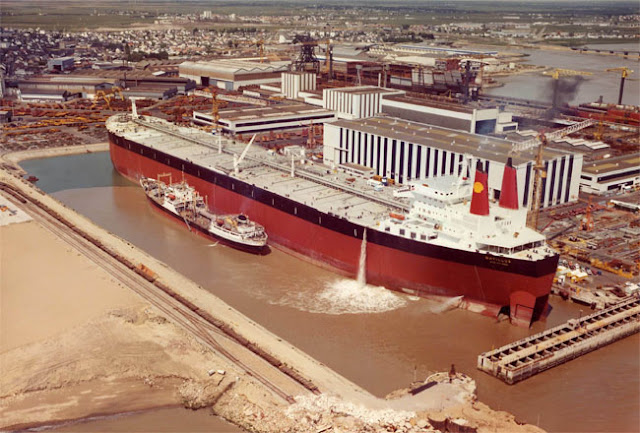

5: Prairial

6: Esso Atlantic


- Ship Type: Oil Tanker (Supertanker)
- Lenght Overall (LOA): 414.22 m (1,359.0 ft)
- Deadweight Tonnage (DWT): 553,662 DWT
- Gross Tonnage: 273,550 GT
- In Service: 1976–1985
- Status: Broken

- Ship Type: Oil Tanker (Supertanker)
- Lenght Overall (LOA): 414.22 m (1,359.0 ft)
- Deadweight Tonnage (DWT): 553,662 DWT
- Gross Tonnage: 274,268 GT
- In Service: 1976–1986
- Status: Broken
5: Prairial

- Ship Type: Oil Tanker (Supertanker)
- Lenght Overall (LOA): 414.22 m (1,359.0 ft)
- Deadweight Tonnage (DWT): 555,046 DWT
- Gross Tonnage: 274,826 GT
- In Service: 1979–2003
- Status: Broken
6: Esso Atlantic

- Ship Type: Oil Tanker (Supertanker)
- Lenght Overall (LOA): 406.57 m (1,333.9 ft)
- Deadweight Tonnage (DWT): 516,891 DWT
- Gross Tonnage: 247,160 GT
- In Service: 1977–2002
- Status: Broken

- Ship Type: Container Ship
- Lenght Overall (LOA): 397.71 m (1,304.8 ft)
- Deadweight Tonnage (DWT): 158,200 DWT
- Gross Tonnage: 170,794 GT
- In Service: 2006-Present
- Status: In Service
8: CMA CGM Marco Polo
CMA CGM Marco Polo is the largest Container ship by capacity (TEU) as of 2012.

- Ship Type: Container Ship
- Lenght Overall (LOA): 396.0 m (1,299.2 ft)
- Deadweight Tonnage (DWT): 187,625 DWT
- Gross Tonnage: 175,343 GT
- In Service: 2012-Present
- Status: In Service
9: Nai Genova

- Ship Type: Oil Tanker
- Lenght Overall (LOA): 381.92 m (1,253.0 ft)
- Deadweight Tonnage (DWT): 402,932 DWT
- Gross Tonnage: 188,947 GT
- In Service: 1978–2000
- Status: Broken up
10: FSO Africa
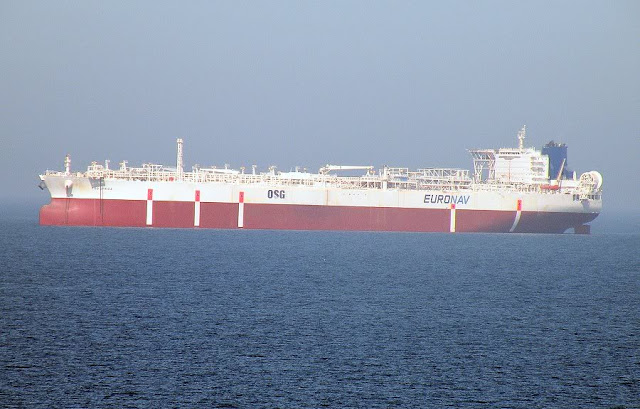

- Ship Type: Oil Tanker
- Lenght Overall (LOA): 380.00 m (1,246.72 ft)
- Deadweight Tonnage (DWT): 441,655 DWT
- Gross Tonnage: 234,006 GT
- In Service: 2002-Present
- Status: In Service
Tools You'll Find Onboard Merchant Vessels
Here are some Tools you'll find on Merchant vessels, These tools are used for various tasks by ship crew.
1: Insulated Plier

2: Nose Plier

3: Hammer
 4: Lugg less Shackle

5: VHF Channel 16

6: Adjustable Spanner

7: Open End Spanner

8: Heart Shape Thimble eye

9: Bow Shackle

10: Bench Vise

11: Screw Drivers

12: Safety Harness

13: Safety Helmet
 14: Ullage Measuring Tape

1: Insulated Plier
2: Nose Plier

3: Hammer
5: VHF Channel 16
6: Adjustable Spanner

7: Open End Spanner

8: Heart Shape Thimble eye

9: Bow Shackle

10: Bench Vise

11: Screw Drivers

12: Safety Harness

13: Safety Helmet

Tag :
Seamanship,
Tools


